




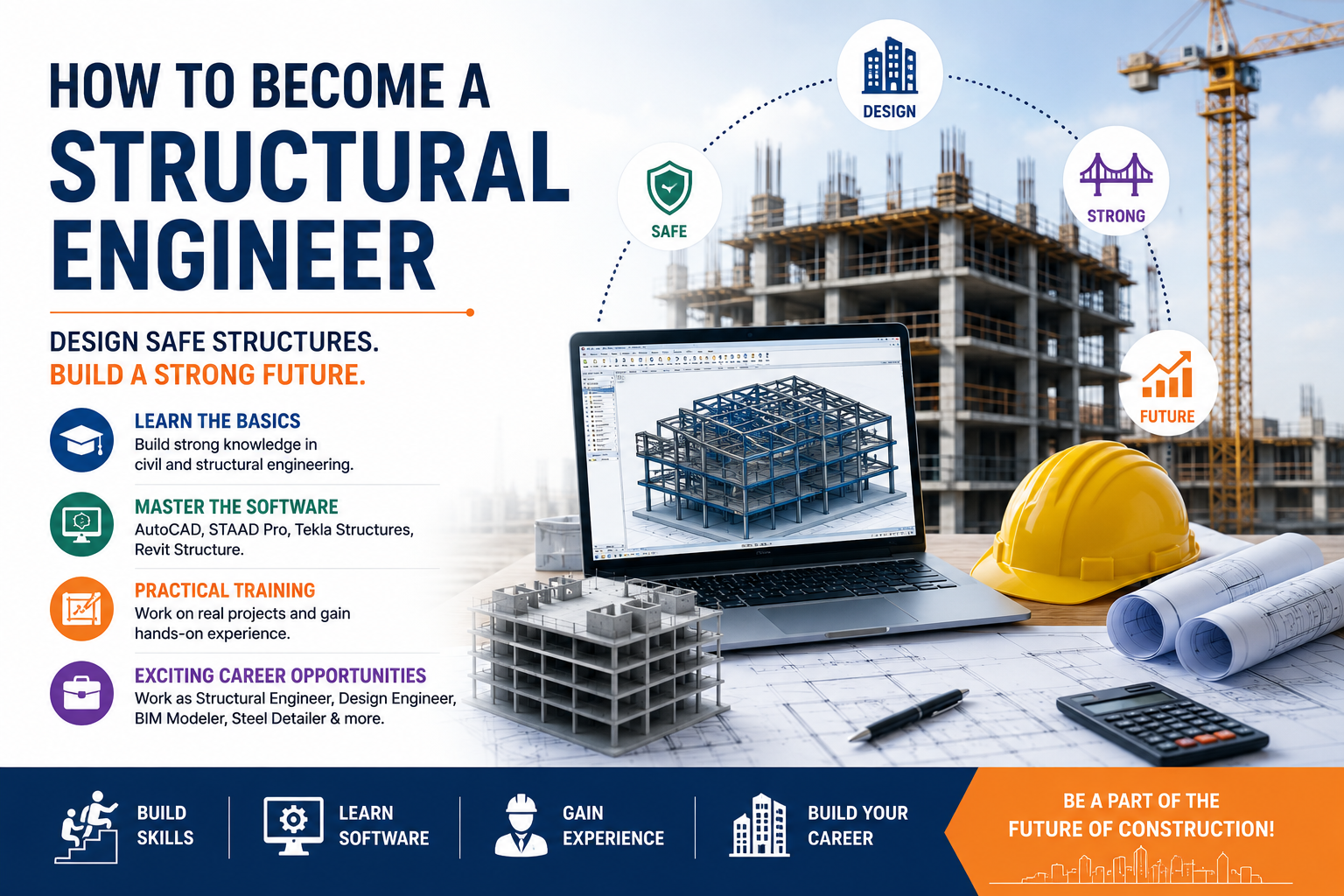
Introduction
Structural engineering is one of the most exciting and rewarding fields in the construction industry. Structural engineers design and analyze buildings, bridges, industrial structures, and infrastructure projects to ensure safety and stability.
If you’re interested in design, construction, and engineering technology, structural engineering can be an excellent career choice.
What is Structural Engineering?
Structural engineering is a specialized branch of civil engineering that focuses on the design and analysis of structures.
Structural engineers ensure that structures can safely withstand loads, environmental conditions, and long-term usage.
What Does a Structural Engineer Do?
A structural engineer is responsible for:
- Designing building structures
- Analyzing structural stability
- Preparing technical drawings
- Coordinating with project teams
- Ensuring safety and compliance standards
- Supporting construction and infrastructure projects
Skills Required to Become a Structural Engineer
To build a successful career in structural engineering, students should develop:
Technical Skills
- Structural Analysis
- RCC Design
- Steel Structure Design
- Drafting & Detailing
Professional Skills
- Problem Solving
- Communication
- Team Collaboration
- Project Coordination
Best Software for Structural Engineers
Modern engineering companies prefer professionals with software expertise.
Popular software includes:
- AutoCAD
- STAAD Pro
- Tekla Structures
- Revit Structure
Learning these tools can help students become industry-ready and improve job opportunities.
Best Courses for Structural Engineering Students
Students can strengthen their knowledge through:
- Structural Design Course
- STAAD Pro Training
- Tekla Structures Course
- Revit Structure Course
- BIM Training
Practical training helps bridge the gap between classroom learning and industry requirements.
Career Opportunities in Structural Engineering
Structural engineers can work in:
- Construction Companies
- Design Consultancies
- Infrastructure Projects
- Industrial Engineering Firms
- BIM & Structural Design Teams
Popular job roles include:
- Structural Engineer
- Design Engineer
- Steel Detailer
- BIM Modeler
- Structural Draftsman
Why Structural Engineering Has a Bright Future
With growing investments in:
- Smart Cities
- Metro Projects
- High-Rise Buildings
- Infrastructure Development
- Industrial Construction
the demand for skilled structural engineers continues to increase.
Professionals with strong technical knowledge and software skills are well-positioned for long-term career growth.
How Professional Training Helps
Institutes like Pacific Training Centre help students gain practical exposure through software training, project-based learning, and industry-focused guidance.
This helps students become more confident and better prepared for professional opportunities.
Conclusion
If you’re wondering how to become a structural engineer, focus on building strong engineering fundamentals, learning industry-standard software, and gaining practical experience.
With the right skills and training, structural engineering can offer a rewarding and future-focused career path.
FAQs
- What qualifications are required to become a structural engineer?
A Diploma or Degree in Civil Engineering is the most common path. - Which software should a structural engineer learn?
AutoCAD, STAAD Pro, Tekla Structures, and Revit Structure are widely used in the industry. - Is structural engineering a good career?
Yes, it offers strong career opportunities in construction, infrastructure, and design projects. - Can diploma students become structural engineers?
Yes, with practical training, software skills, and industry exposure. - What are the career opportunities in structural engineering?
Students can work as Structural Engineers, Design Engineers, Steel Detailers, BIM Modelers, and Structural Draftsmen. - Why is practical training important?
Practical training helps students gain real-world experience and become industry-ready.